Introduction
2026 Nucleate’s Activator cohort kickoff wasn’t just a welcome webinar. It was a blunt snapshot of where biotech is heading and what first-time founders should stop ignoring.
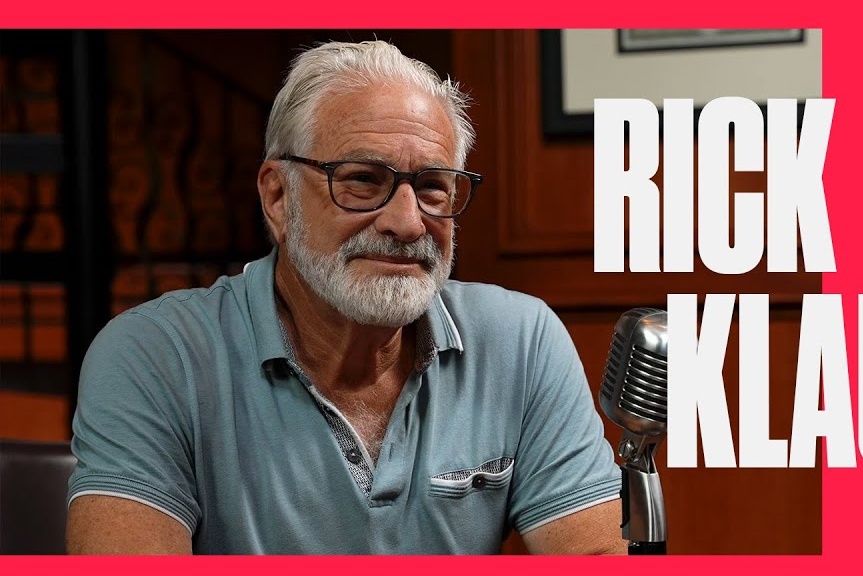
The fireside guest was Dr. Rick Klausner: former Director of the National Cancer Institute, former Gates Foundation global health leader, and later a builder-investor behind companies like Juno Therapeutics, Grail, and Altos Labs. The session was hosted by Zach Cogan (former Nucleate co-president; PhD candidate at UCSF), with opening remarks from Nucleate leadership including Marcelo Castro-Pizarro (Activator Program Manager, Nucleate HQ), Faridha (EVP of Activator; co-managing director of the New York chapter), Oliver (Nucleate co-founder; Executive Director), and Caroline (Global Director of Operations).
1) “Narrative” is not branding. It’s the operating system.
Rick said something founders often hear but rarely implement: the best startups are built on a story that is evidence-based and disciplined, but still a story.
He described narrative as the glue for:
- hiring,
- culture,
- investor alignment,
- and endurance when experiments fail.
He even used it as a hiring filter. When he met Hans Bishop (who later became CEO at Juno and partnered again at Grail and Altos), Rick said they immediately clicked at the “narrative level.” It was so strong he offered Hans the CEO job by the end of a lunch meeting.
Founders should take this as a warning: if you can’t tell the story clearly, you will bleed time, talent, and capital.
2) Team > pedigree. Ignore “resume tyranny.”
Rick’s Hans Bishop story had another point: great operators don’t always come from shiny logos.
Hans was working at a company Rick openly called not very good, and people around him didn’t want to interview Hans “because the company had a bad reputation.” Rick thought that was ridiculous: sometimes the best people stand out inside messy environments.
For founders building early teams, this matters. You’re not hiring LinkedIn headlines, you’re hiring decision-makers under uncertainty.
3) Investor alignment is everything (and founders should diligence investors)
Rick was unusually direct about the boardroom failure mode: taking money from investors who don’t share your narrative leads to impatience, pressure to exit early, and strategic whiplash.
He recommended a simple diligence tactic: talk to founders who have been through hard times with those investors. Ask who stayed constructive when things got ugly.
He also dropped a spicy investor test: if an investor doesn’t show gratitude for the opportunity founders bring, they’re likely the wrong partner. His logic was simple: investors don’t have anything without founders to back.
4) Translational reality check: we still don’t predict humans well
One of the most important (and uncomfortable) themes: biotech has learned more science, but hasn’t meaningfully improved novel drug success rates.
Rick pointed at the core problem: our systems are often reductionist and misleading:
- in vitro models,
- and many “forced” mouse disease models
frequently fail to predict human outcomes.
If you’re a lab-stage founder, the implication is brutal but liberating: your job is not to maximize “cool data.” Your job is to prove robustness and reproducibility and to design a path that actually translates.
5) IP: stop treating it like a religion
A founder asked whether they should wait for patents before fundraising. Rick’s answer: he’s increasingly skeptical of early IP as the gating factor, especially when universities and tech transfer offices slow everything down.
He argued “intellectual know-how” can matter more early, and that truly defensible IP is often created inside the company later (he referenced stronger forms like “composition of matter”).
You don’t need to ignore IP. But don’t let it become a bureaucratic anchor that delays real progress.
6) China is a real competitor on innovation, speed, and cost
Rick called out the rise of China as one of the biggest structural shifts in biotech. His view: companies and investors are increasingly attracted to China because it can be faster and cheaper, sometimes dramatically so.
But it’s not just “move everything to China” either. He flagged constraints like:
- whether US regulators accept clinical data from China,
- and the practical risk of capital repatriation (“can you ever get it out?”).
For US founders, the conclusion is clear: capital efficiency and scientific quality have to rise.
7) AI changes what “doing science” even means
Rick’s AI comments weren’t about slide-deck “AI-enabled” claims. He described AI as a force that could change:
- how we generate hypotheses,
- how we prioritize literature,
- and how we model biology across scales (molecule → organ → organism).
He also described the thrill (and fear) of in silico results catching up to what labs historically took years to learn.
The biotech industry is not adding AI as a tool. It’s being rewired by it.
8) Cell therapy next wave: in vivo manufacturing is exciting, but solid tumors are complex
In Q&A, Rick addressed in vivo CAR approaches (delivering vectors so the body generates CAR cells). His view: it’s exciting and could eventually replace parts of hematologic CAR-T manufacturing.
But he was skeptical about near-term feasibility for solid tumors because solid tumor solutions may require complicated, multi-vector, multi-cell-population engineering. He gave an example involving four simultaneous vectors in precise ratios.
This is a reminder for founders: the “simpler future” story is attractive, but biology often forces complexity.
Final thought
There were plenty of big-picture comments about uncertainty in the broader environment, but the core message was surprisingly practical:
- Build a narrative that can survive reality.
- Prove translatability, not just novelty.
- Choose aligned investors, not just available money.
- Assume global competition and AI acceleration are permanent.